Product Description
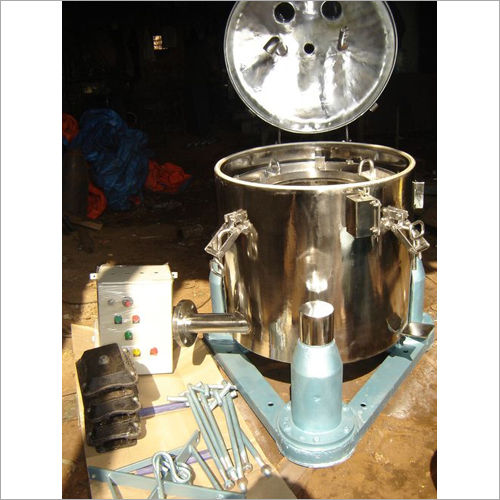
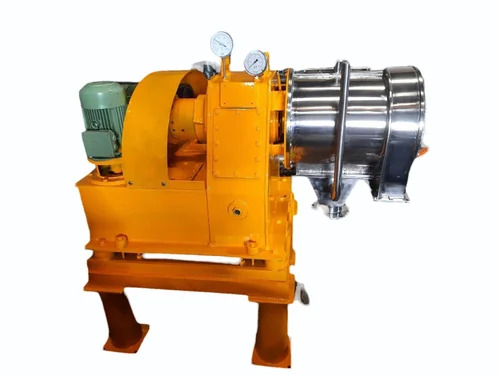
Believing in fair business ethics, we are engaged in manufacturing, exporting and supplying the best quality Liquid Discharge Centrifuge. This centrifuge is manufactured as per industrial quality standards with the use of optimum quality components. It is widely used in various industrial and commercial processes for separation of solids and liquids. Additionally, our clients can avail the provided Liquid Discharge Centrifuge at reasonable prices from us.
Features Of Liquid Discharge Centrifuge:
- Strong rust proof enclosure
- Excellent functionality
- Easy to maintain
- Optimum throughput
Specifications Of Liquid Discharge Centrifuge:
1.high efficient
2.advanced equipment and technology
3.compective price
SS Three-column Centrifuge
Centrifuge is a discontinuously-operated general mechanical product. It is applicable for separation of suspending liquid with solid phase granules more than 0.01 mm such as granular, crystalline or fibrous materials, and may be used to dehydrate textiles as well. It is widely used in chemical,pharmaceutical, food and light industries. Centrifuge is a machine to separate solid and liquid in the suspending liquid and emulsion with the centrifugal force. Centrifugal filtration is achieved after the liquid in the materials is thrown off on the inner wall of the shell through holes of filtration medium and rotary drum wall under the action of centrifugal force, and discharged from the filtrate outlet after collection while the solid is left in the rotary drum. Main Technical Parameters for SS Three-column Centrifuge
Specification
|
Application
|
Pharmaceutical,Food,Chemical
|
|
Basket Height
|
Upto 225 mm
|
|
Capacity Volume
|
25 L
|
|
Drive
|
2 HP
|
|
Material
|
Stainless Steel
|
|
Brand
|
Apollo Machinery
|
|
Material Grade
|
SS316
|
Versatile and Efficient SeparationThis liquid discharge centrifuge offers exceptional performance in solid-liquid separation tasks. Its automatic operation, supported by electric drive and PLC control, streamlines production processes and minimizes manual intervention. The machines robust single-shaft configuration and galvanized surface make it ideal for demanding industrial environments.
Tailored for Critical IndustriesEngineered to meet the stringent requirements of pharmaceutical, food, and chemical sectors, our centrifuge is designed for both safety and efficiency. Its wide capacity range and electric power source make the machine adaptable, reliable, and effective for various processing needs.
FAQs of Liquid Discharge Centrifuge:
Q: How does the liquid discharge centrifuge operate automatically?
A: The centrifuge uses electric drive and is controlled by a PLC (Programmable Logic Controller), which automates the separation process, monitors every stage, and ensures optimal performance with minimal manual intervention.
Q: What are the primary industrial applications for this centrifuge?
A: This centrifuge is extensively used in pharmaceutical, food, and chemical industries for separating solids from liquids efficiently during various manufacturing processes.
Q: When is it beneficial to use a centrifuge with PLC control?
A: Using a centrifuge with PLC control is especially advantageous in operations that require precision, reproducibility, and automation, ensuring consistent results during continuous production.
Q: Where is this centrifuge manufactured and supplied from?
A: We manufacture, export, and supply this liquid discharge centrifuge from India, serving clients globally with industry-standard equipment.
Q: What surface treatment does the centrifuge have, and why is it important?
A: The centrifuge features a galvanized surface, which protects against corrosion and extends the machines operational life, especially in harsh chemical environments.
Q: How does the single shaft design benefit the centrifuges performance?
A: A single shaft configuration provides mechanical stability, simplifies maintenance, and enhances the efficiency of the separation process.
Q: What are the notable benefits of using an automatic electric centrifuge in production?
A: Key benefits include increased throughput (up to 500 kg/hr), reduced manual labor, improved product consistency, and reliable operation suitable for high-demand industrial settings.





 Send Email


 Send Inquiry
 Send Inquiry
 Send SMS


